
Do 3D Virtual Tours Actually Help Sell Property?
By Salar Kiabi, Founder, FIMIT · · 5 min read
Last reviewed
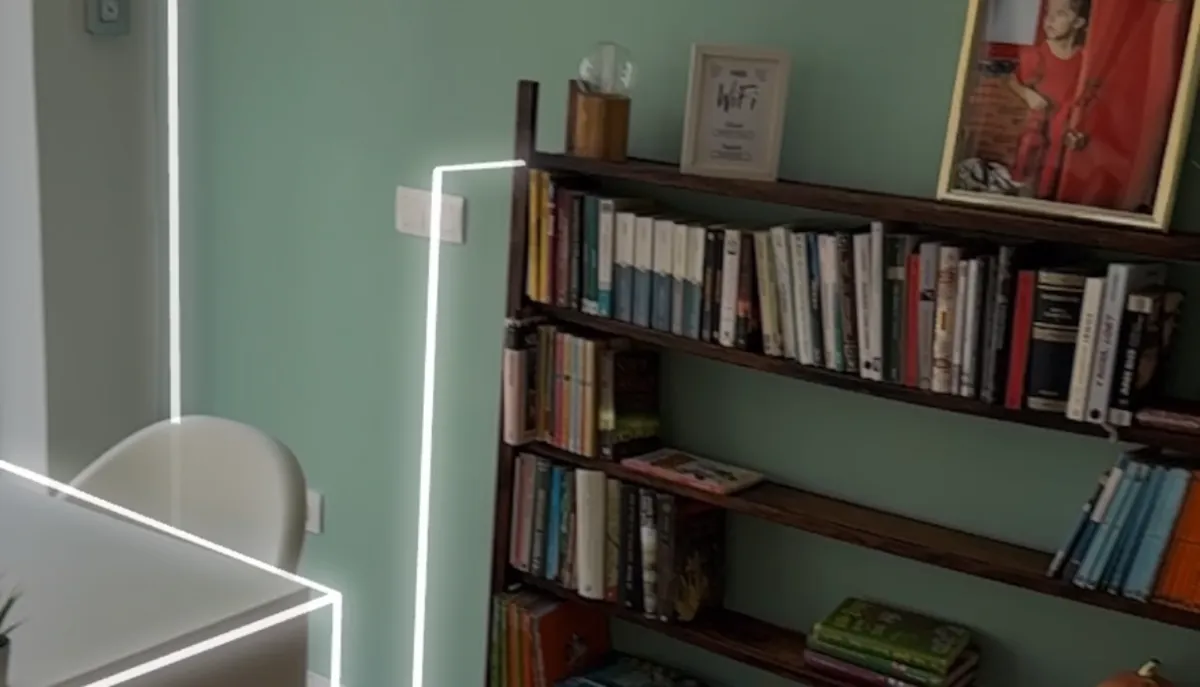
Do 3D virtual tours help sell property, or are they an expensive nice-to-have? A 3D virtual tour lets a buyer walk a property online before they ever book a viewing, and every agent eventually asks whether that actually moves the needle. The honest answer: 3D tours help most when they do a specific job — pre-qualifying interest and cutting wasted viewings — and when they are cheap enough to put on every listing rather than just the flagship ones.
What a 3D virtual tour actually does for a listing
- Pre-qualifies buyers: people who book after exploring the space in 3D tend to be a better fit, so fewer viewings are wasted.
- Reaches out-of-area and international buyers who cannot attend in person early on.
- Keeps a listing engaging for longer, giving buyers something to explore rather than a gallery to swipe past.
- Signals a professional, transparent listing — which builds trust before the first conversation.
Do 3D virtual tours help sell property faster?
A tour does not conjure demand out of nowhere, but it can channel the demand you already have into better outcomes. A buyer who has walked the space online arrives at a viewing already familiar with the layout, there to confirm a feeling rather than discover the property from scratch. That can shorten the process and cut the appointments that go nowhere. The tour is not selling the house on its own — it is making every other part of your process more efficient.
Think about where a tour saves you time rather than where it dazzles. It handles the first viewing for every buyer at once, day or night, without you leaving the office. It lets someone re-walk a property they liked instead of asking for a second appointment to remind themselves. And it filters out the buyers a property was never going to suit before they take up a slot in your diary. None of that is glamorous, but it is where the return on a tour actually comes from — protecting the scarcest thing an agent has, which is time.
- Handles the first viewing for every buyer at once, around the clock, without you leaving the office.
- Lets an interested buyer re-walk the property instead of booking a second appointment.
- Filters out buyers a property was never going to suit before they take a slot in your diary.
- Reaches remote and international buyers who would otherwise need a flight just to take a first look.
When a 3D tour is worth making
A tour earns its place when it is quick to produce and paired with the facts buyers need. A walk-through with no measurements leaves buyers guessing; a plan with no sense of the space leaves them cold. The strongest listings offer both — an interactive 3D model to understand the layout and flow, and a to-scale floor plan to check it works for them. The moment a tour becomes fast and cheap enough to make for every property, the question stops being “is this listing worth a tour?” and becomes “why would I leave one without?”
3D tour vs floor plan — you need both
It is tempting to treat a 3D tour as a replacement for a floor plan, but they answer different questions. The tour tells a buyer what it feels like to stand in the space; the floor plan tells them whether their furniture, their family and their life fit into it. A serious buyer wants the emotional pull and the measurable proof; a listing that offers only one leaves half their questions open. Offering the pair gives a browser everything they need to decide on a viewing.
The two also reinforce each other. A buyer who has felt the flow of a home in 3D reads its floor plan with more understanding, and a buyer who has checked the dimensions on the plan explores the tour with more confidence that the space is real and not a wide-angle illusion. Photos can flatter; a to-scale plan keeps everyone honest. Presenting the tour, the plan and the photography together is what a modern listing looks like — and it is only practical if all three come from roughly the same amount of effort.
The old blocker: cost, cameras and second visits
Historically, 3D tours meant a specialist camera, a tripod and a separate visit — so agents reserved them for premium listings. That is the real reason tours never became standard: not that they do not work, but that they were slow and expensive to make for every property. Add a second appointment and a turnaround wait to every listing and the cost simply is not justified on a mid-market flat, however much a tour would have helped it sell.
Producing a 3D tour from a single iPhone walk-through
FIMIT changes that maths. Walk the property once with a LiDAR-equipped iPhone Pro (12 Pro onwards) or iPad Pro and you get both an interactive 3D model and a precise, to-scale 2D floor plan, generated automatically in minutes using Apple RoomPlan. Be clear about what that 3D model is: it is built from the measured geometry of the space — an accurate, navigable model of the walls, openings and layout — not a stitched panorama of photographs. It is excellent for understanding how a home is laid out and how it flows, but it is not a photo-real replacement for professional photography, and the two work best side by side. Because a scan takes minutes and needs no second visit, it is finally realistic to put a 3D model and reliable measurements on every listing, not just the flagship ones. Every scan is EU-hosted, GDPR-ready and organised by property, so your team can embed the model and the plan on the listing and give every enquiry — local or international — the full picture of the space.
Frequently asked questions
Do 3D virtual tours help sell property faster?
They help most when they do a specific job: letting buyers qualify themselves before booking. A buyer who explores a property in 3D first has had the chance to rule it out, so more of your diary can go to people the space might genuinely suit. A tour is not a magic multiplier of every listing, but paired with a floor plan it is a practical way to reduce time wasted on both sides.
Are 3D virtual tours worth it for estate agents?
They are worth it when they are quick and cheap enough to offer on every listing, not just premium ones. The old blocker was cost — specialist cameras, tripods and separate visits. Capturing a tour from a single iPhone walk-through removes that, so the maths changes: a tour that costs almost nothing in extra time is worth adding to protect your schedule and reach remote buyers.
What is the difference between a 3D tour and a video walkthrough?
A video walkthrough is a fixed clip the buyer watches passively; a 3D tour lets them move through the space themselves, pausing and exploring in their own order. A 3D model also comes from measured geometry, so it can sit alongside a to-scale floor plan. FIMIT produces both a navigable 3D model and a precise 2D plan from one scan.
Do you need a special camera to make a 3D tour?
No. A LiDAR-equipped iPhone Pro (12 Pro onwards) or iPad Pro is enough — though standard, non-Pro iPhones lack the sensor. FIMIT uses Apple RoomPlan to turn a single walk-through into both a 3D model and a to-scale 2D floor plan in minutes. That removes the specialist camera, the tripod and the separate appointment that once made 3D tours a premium-only extra.
Do 3D tours reduce wasted viewings?
Cutting wasted viewings is their clearest mechanism. When buyers can walk the property online first, the ones who then book have already checked the layout against their needs, which can mean fewer viewings that end in a polite no. For agents handling out-of-area or international buyers, a tour also spares both sides a long trip for a property that was never the right fit.
About the author
Salar Kiabi, Founder, FIMIT
Salar Kiabi is the founder of FIMIT, which turns a single iPhone LiDAR walk-through into an accurate, to-scale 2D floor plan and 3D model for property and facility teams. He writes about measurement accuracy, capture technique, and getting a floor area from a phone that you can actually stand behind.
Related reading
- Floor Plans vs Photos: What Home Buyers Actually WantPhotos sell the feeling; floor plans answer whether a home will actually work. Why buyers want both on a listing, and how to make them from one iPhone scan.
- Floor Plans for Real Estate Listings: Why Serious Buyers Expect ThemA floor plan answers the questions photos cannot, so viewings are better qualified. What makes a great one, and how to make it from an iPhone.
- What Makes a Great Real Estate Floor PlanThe seven things that separate a floor plan buyers trust from one they ignore — accuracy, labelling, scale and more — and how to hit them every time.
- What Makes FIMIT Different: A Trusted Spatial BaselineWhat sets FIMIT apart: one iPhone walk-through becomes a trusted spatial baseline — a to-scale floor plan, 3D model and floor areas you can prove.